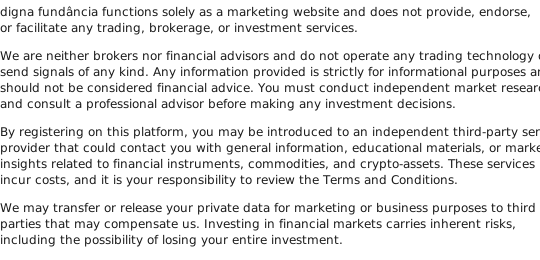
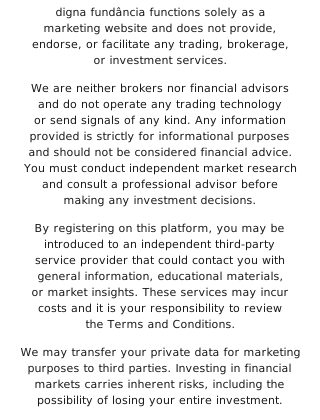
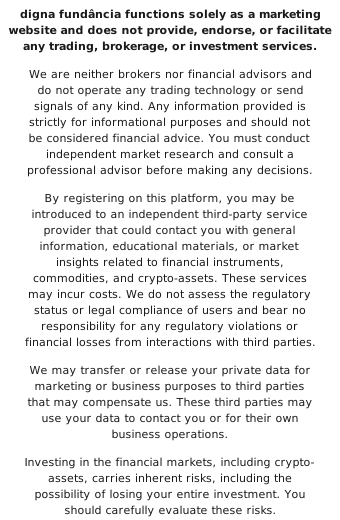
digna fundância
digna fundância offers a premium snapshot of automated trading bots and AI-powered trading support for market monitoring, execution logic, and orchestration. Experience automated consistency, configurable governance, and clear visibility across instruments—assembled for swift, informed decisions.
- AI-enhanced analytics for autonomous trading bots
- Tailored execution rules and proactive monitoring
- Secure data handling with robust operations
Key capabilities
digna fundância structures essential elements frequently found in automated trading ecosystems, prioritizing clarity, configurability, and governance. The suite centers on AI-assisted guidance, execution logic, and proactive monitoring to support professional, scalable workflows. Each card highlights a distinct capability for quick assessment.
AI-augmented market modelling
Automated trading bots leverage AI-driven insights to identify regimes, gauge volatility, and maintain consistent inputs for decision-making within workflows.
- Feature engineering and normalization
- Model version control and audit trails
- Configurable strategy envelopes
Rule-based execution framework
Execution modules describe how automated trading bots route orders, enforce constraints, and manage lifecycle states across venues and assets.
- Order sizing and throttling controls
- Stateful lifecycle handling
- Session-aware routing policies
Operational oversight
Monitoring patterns deliver runtime visibility for AI-enabled trading and bots, enabling traceable workflows and consistent review.
- Health checks and log integrity
- Latency and fill diagnostics
- Incident-ready status views
How it works
digna fundância outlines a streamlined automation path used by AI-assisted trading systems, from data readiness to execution and monitoring. The sequence emphasizes dependable inputs and clear operational steps that remain legible across devices and languages.
Data intake and normalization
Inputs are transformed into comparable series so bots can process uniform values across assets, sessions, and liquidity conditions.
AI-enabled context evaluation
AI-assisted analysis scores contextual factors like volatility and market microstructure to support steady decision paths.
Execution workflow coordination
Bots coordinate creation, adjustments, and completions using state-based logic for reliable automation handling.
Monitoring and review loop
Live monitoring summarizes operational metrics and traces, keeping AI-guided automation observable during reviews.
FAQ
This section provides concise clarifications about the digna fundância platform and how automated bots and AI-powered trading assistance are described. Answers emphasize functionality, concepts, and workflow structure, with expandable items for quick access.
What is digna fundância?
digna fundância is a premium information hub that summarizes automated trading bots, AI-driven trading assistance, and execution workflow concepts used in contemporary markets.
Which automation topics are covered?
digna fundândia covers stages from data preparation to model context evaluation, rule-based execution, and operational monitoring for autonomous trading bots.
How is AI used in the descriptions?
AI-powered trading assistance acts as a supportive layer for context assessment, consistency checks, and structured inputs that bots can employ within defined workflows.
What kind of controls are discussed?
digna fundância outlines common operational controls such as exposure limits, order sizing policies, monitoring routines, and traceability practices used alongside automated trading bots.
How do I request more information?
Use the registration form in the hero section to request access details and receive follow-up information about digna fundância coverage and automation workflows.
Trading psychology insights
digna fundância highlights operational habits that complement automated trading systems, emphasizing repeatable workflows and transparent review. The guidance focuses on disciplined processes, clean configurations, and structured monitoring to sustain stable performance. Expand each tip for a concise, practical perspective.
Routine-based review
Regular reviews reinforce consistent operation by examining configuration changes, monitoring summaries, and workflow traces produced by the automation stack.
Change management
Structured change management preserves predictable automation by tracking versions, documenting parameter updates, and maintaining clear rollback paths.
Visibility-first operations
Prioritizing readable monitoring and obvious state transitions keeps AI-assisted trading explanations clear during workflow reviews.
Limited-access window
digna fundância regularly refreshes its AI-driven trading coverage. The countdown provides a simple timing reference for the next content refresh. Use the form above to request access details and workflow summaries.
Risk management checklist
digna fundância presents a practical checklist of operational risk controls commonly configured around automated trading bots and AI-powered trading assistance. The items emphasize parameter hygiene, continuous monitoring, and disciplined execution. Each point is framed as an actionable best practice for structured review.
Exposure boundaries
Set clear exposure borders to guide automated bots toward stable sizing and guardrails across instruments.
Order sizing policy
Adopt a sizing policy that aligns with operational limits and ensures traceable automation behavior.
Monitoring cadence
Maintain a steady monitoring rhythm to review health signals, workflow traces, and AI context summaries.
Configuration traceability
Keep parameter changes readable and consistent across bot deployments with thorough traceability.
Execution constraints
Define constraints that synchronize order lifecycle steps and sustain stable operations during active sessions.
Review-ready logs
Maintain logs that summarize automation actions and provide clear context for audits and follow-up.
digna fundança operational summary
Request access details to explore how automated bots and AI-driven trading assistance are organized across workflow stages and control layers.